Beliefs an values of the Khmer Empire
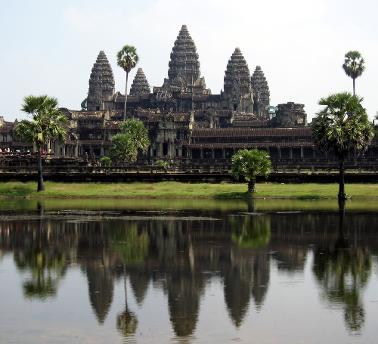
 Map of Khmer empire | The Khmer empire dominated south-east Asia after Jayavarman II founded his kingdom in 802. The Khmer thrived until 1431 when Angkor Wat was abandoned. Originally, the Khmers had strong beliefs that all objects both the living and the non-living had a spirit. The Wind, water and earth were the most common to be thought to have had spirits. This was known as the ‘Animism’ religion. They believed all spirits were eternal and lived on forever. As traders came from India the Hindu religion became very influential to the Khmer empire. Khmers now integrated key beliefs into their lives. Reincarnation, or rebirth, was accepted as a truth. The polytheistic ideal fit into animism well and the idea of Brahma and spirits were similar. Buddhism was one of the most popular prevalent religions in the whole of the Khmer empire. It was similar to Hinduism but without as many gods. Communities were created to support monasteries; even the official written language used by the government was Sanskrit from Buddhist texts. With these prominent beliefs, the people of the Khmer empire were overall fairly peaceful people. |
Similarities in the Social Classes in the Angkor and the Khmer Empire
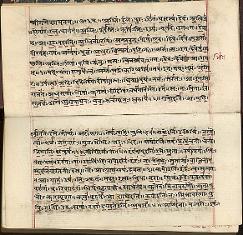
There were many things that were the same across the Khmer empire’s social classes. An example of this would be how the families lived together. Each person would live with their own family in their own house. It was like this in every social class. Even if a family did not own a house, a peasant or a slave for example, they would still live together. Another thing they had in common was that they all wrote the same and spoke in the same dialect. Each person from each class spoke the language of Cambodian and wrote using the Sanskrit writing system. Sanskrit used a number of different symbols that looked a lot like scratches to some people today. According to Chinese diplomat Zhou Daguan’s work after spending from 1296 to July 1297 in Angkor Wat both men and women wore a piece of cloth tied around their waist as a skirt to prevent them from overheating in the hot, humid climate. Unlike today, woman did not wear anything across their chests either. Another thing each social class had in common was that they each depended on each other. The kings depended on the Nobles. The Nobles and the officials depended on the ordinary people. There are many things the social classes have in common from clothing, to language, to families, to depending on each other. | 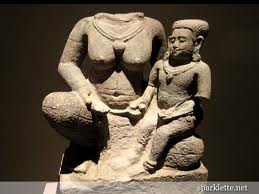 Statue showing what the Khmer people wore
 |
Differences in the Social Classes in Angkor and the Khmer Empire
 Social Pyramid
| Although there may be some similarities between the social classes of the Khmer empire, there are also various differences as well. The Khmer kings were considered to be semi-divine, with magic powers whereas the peasants were simply known as peasants. They could not have been more different. Khmer kings lived in large stone temples built by thousands of workers whilst the peasants lived in small thatch houses they had to build themselves. Zhou Daguan describes their houses as having thatched roofs and being in a simple style. They cooked their meals in earthen-ware pots and ate from bowls made out of leaves. In comparison to the long hard days of a peasant, the Nobles did not have to work hardly at all. Peasants could not own land like the Nobles or kings but instead they worked on it. The Empire's population of peasants is by far the largest particularly when compared to the population of Nobles. Artisans were also quite different when compared to the other social classes. They were just a small portion of the overall population of the Empire but were essential in the life of the Nobles. Artisans were the people who provided the Nobles with their luxury goods, designed and built temples and made weapons for battles and wars and worked in silk production and as tailors. When it comes down to possessions, money and power the classes could not be more different. |
Conclusion
There were many similarities and differences in the lives o the Khmer empire. They each shared the same religions such as Hinduism, Buddhism and Animism and wore the same style of clothing. They spoke the same tongue and shared similar interests. However, when it comes to money, possessions or power they certainly did not have any similarities there. With most of the Empire's population living in tough conditions and the other small hand full living the high life on their own properties. The kings depended on his nobles and in turn they depended on the ordinary people. If just one social class stopped doing their part the whole empire would fall into chaos. This is what makes the Khmer Empire so complex and yet so effective.